National Student Money Survey 2026 – Results

As Student Loan repayments come under closer scrutiny, this survey examines the financial challenges faced by those still at university and the issues with the current funding system.
Credit: Linda Bestwick – Shutterstock
This is the 14th edition of our National Student Money Survey, and follows a year in which Student Loans have rarely been out of the headlines.
In the 2025 Autumn Budget, the government announced its plan to freeze the Plan 2 Student Loan repayment threshold. This decision received significant pushback – including from Save the Student – and triggered a wider debate about the fairness of Student Loan repayment terms.
Yet, as this survey's findings lay bare, the issues with the Student Finance system run far deeper. Maintenance funding falls woefully short of living costs, not least because consecutive governments in England have failed to address the significant real-terms cuts to loans dating back to the early 2020s.
As a result, students are skipping meals, unable to socialise and are even considering leaving university altogether.
We welcome the prospect of Student Loan repayment reform, but this cannot be the full extent of the government's action. This moment of heightened scrutiny must be taken as an opportunity for wholesale change, with a significant increase in maintenance funding as the number one priority.
What's in our report?
- Key findings
- Students are struggling to make ends meet
- How do students get money?
- How are parental contributions to students changing?
- How much do students spend?
- Which areas have the highest student living costs?
- Student food poverty
- Do Student Loans stretch far enough?
- How would students get money in a cash crisis?
- How do current students feel about Student Loan repayments?
- Is university good value for money?
- How many consider dropping out due to money?
- What students expect from graduate life
Key findings from the National Student Money Survey 2026
Here are some of the headlines from this year's National Student Money Survey:
- Surveyed students spend an average of £1,146 per month. In London, that figure is £1,326 per month.
- On average, Maintenance Loans fall short of spending on living costs by £467 per month*.
- Almost two-thirds of respondents (63%) skip meals at least some of the time to save money.
- 9% of those surveyed used a food bank in the 2025/26 academic year.
- The average parental contribution has fallen for the third consecutive year, down to just £132 per month.
- Over a quarter of surveyed students (28%) have two or more jobs.
- 91% of respondents think at least one change should be made to Student Loan repayments, with abolishing interest rates (59%) the most popular.
- A record 77% of respondents were worried about their Student Loan repayments.
- 46% of respondents have considered dropping out of university due to money-related issues.
- 59% of those surveyed weren't confident about finding work after graduating – the highest since the pandemic.
- 46% think AI will negatively impact their graduate job prospects.
*This figure has since been updated to £498 per month – see here for more details.
Expert comment
Tom Allingham, Save the Student's student money expert, says:
This survey serves as a stark reminder that repayment terms are far from the only issue with Student Loans.
While graduates rightly complain about their debts rising well beyond what they originally borrowed, the cruel irony for current students is that it's nowhere near enough in the first place.
Maintenance Loans have always fallen short of living costs, but this has become exponentially worse in recent years. In previous generations, that might have meant skipping one or two nights out or living on baked beans for a few days.
Today, following significant real-terms cuts, almost two-thirds of respondents are skipping meals to save money, over a quarter work two or more jobs, and countless others speak of extreme social isolation due to financial pressures.
The government's pledge to increase funding with forecast inflation will do nothing to fix this, and is simply a continuation of the policy that caused the current crisis. Meanwhile, although we welcome the reintroduction of Maintenance Grants in England, far too little cash will be available to far too few students.
We're calling on the government not to ignore the plight of current students, and to ensure any Student Loan reforms include increasing maintenance funding to catch up with inflation.

Students are struggling to get by financially
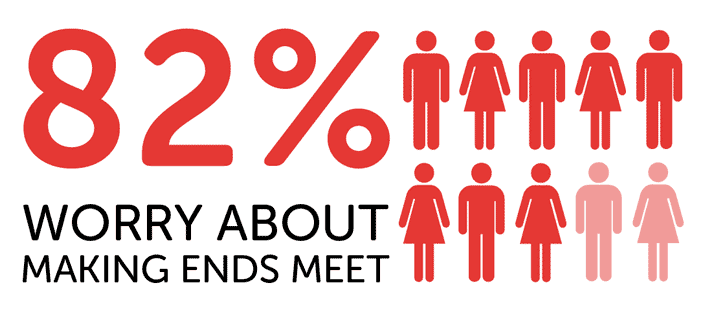
After falling for the past two years, the proportion of students in our survey who said they worry about making ends meet has risen to 82%. This marks a return to the highs recorded in our 2023 and 2022 surveys, conducted at the peak of the cost of living crisis.
As we've long warned, students have been among the hardest hit by rising prices, but have received little to no additional support to help them cope. Indeed, in England in particular, the Maintenance Loan has fallen far short of inflation.
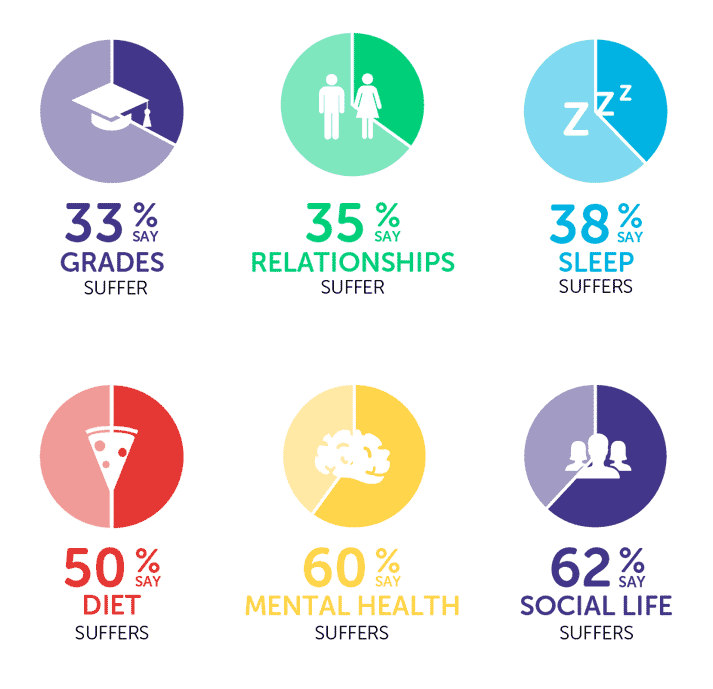
This sustained financial pressure continues to impact all areas of students' lives.
85% of respondents said at least one aspect of their wellbeing has been affected by money concerns, with mental health (60%, up from 50%) and social lives (62%, up from 59%) the hardest hit.
And, as we'll cover in more detail later, half of those surveyed said their diet suffers too.
This is what students told us about how financial concerns affect them:
- People refused to date me as I couldn't afford the ‘normal' relationship. I couldn't pay for both of us if we went out or [wanted to] be spontaneous. Being 25, that was quite hard.
- I can't buy healthcare products like toiletries, skincare [or] supplements. Can't get my hair cut. Can't buy decent pet food or go to vet check-ups. Not having any spending money affects every part of life.
- Being poor turns you into a shell of a woman, sitting in your room shovelling dry cereal into your mouth with absolutely no ability to do the things you want.
- I was sent to an emergency treatment centre due to fatigue and breathing difficulties, which the doctor then identified as anaemia. This, I believe, was due to having to reduce my meat consumption in order to save money.
- Literally have no money to do anything.
- I sometimes don't go out to restrict spending money, or starve myself to ensure that I don't overuse it. I will also worry about it constantly and have had anxiety attacks because of it.
- Every time my friends invite me somewhere I have to say no because I can't afford it. Now they're p*ssed off with me, calling me a "fake" friend because I say no. But they won't hang out at home or do anything cheap, and they know how much I'm struggling.
- As a mature student with chronic health issues I really struggle for money. I'm usually too fatigued to be able to work for extra money. The money I have doesn't really allow me to buy healthy options food-wise either.
- Worrying about running out of money has also prevented me from getting therapy that I need.
- My grades have dropped quite a bit from an average of 72 to 59 due to recent stress about money and rent.
How do students get money?
This is where students in our survey told us they get money from:
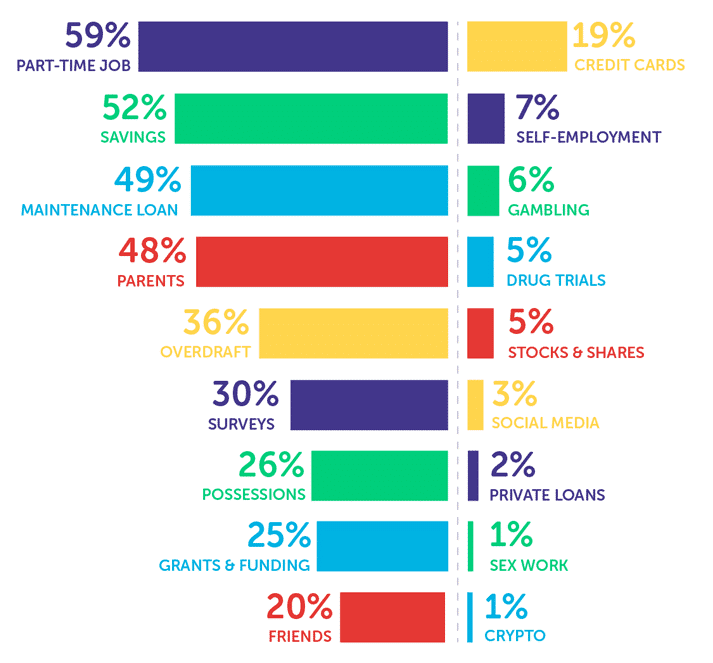
There has been a slight increase in the proportion of respondents who use a part-time job as a source of income (59%, up from 58%), but a larger decrease in those who rely on parental contributions (48%, down from 52%).
Concerningly, 19% of respondents said they use credit cards as a source of money, up from 15% in 2025.
Credit cards are among the more expensive and dangerous forms of extra cash available to students. Other than cards with an interest-free period – which students are very rarely eligible for – the interest on any unpaid balances can quickly accumulate, causing further financial distress.
We'd always encourage students to turn to cheaper, safer forms of borrowing if possible, such as the 0% overdrafts that come with student bank accounts.
Students working alongside their studies
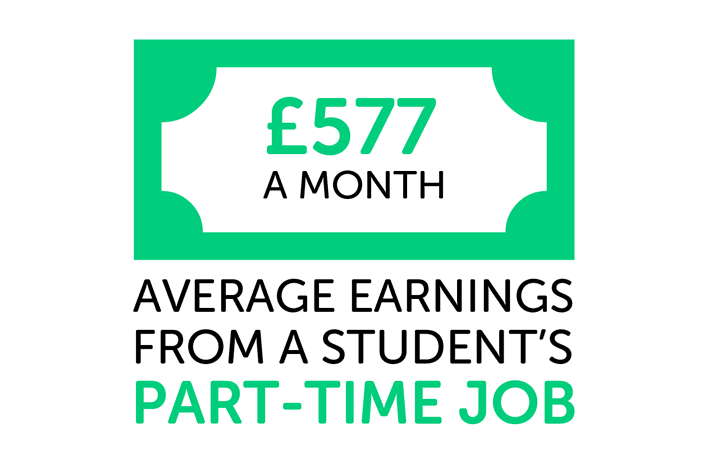
Among those who worked, the average respondent made £577 per month from their employment, up 5.5% on 2025 (£547 per month).
This exceeds CPI inflation (2.7%) over the same period (July 2025 – July 2026), and is perhaps explained by the additional hours worked by this year's respondents (38 hours per month, up from 36 last year).
The amount of paid work students are having to do has become a key talking point in recent years. So, for the first time, we also asked respondents how many jobs they have.
| Number of jobs | How many who work said they have this many jobs? |
|---|---|
| 1 | 72% |
| 2 | 22% |
| 3 | 5% |
| 4 | 1% |
Although the majority (72%) had just one job, it's worrying that over a quarter (28%) had two or more.
As explained, the average employed respondent worked for an average of 38 hours per month (about 8.8 hours per week). For context, universities generally advise that students work no more than 15–20 hours per week to avoid negatively impacting their studies.
Although the average employed student in our survey is working far fewer hours than the recommended limit, 38% still said their studies have suffered as a result.
10 surprising ways students have made money
Every year, students tell us some of the more unusual ways they've made money.
Here's a selection from the 2026 survey:
- I made small gnomes.
- [I was a] TV extra.
- I donated bone marrow and blood in my first year. They paid me £120 and I had to go to hospital for a two-hour appointment.
- I earned a little money by completing paid online surveys and [signing up for] testing sites.
- Testing a deodorant for a company for two months.
- Clinical trial where I couldn't eat anything with colour in it for a week.
- Drove my friend to buy a car from a dealership 250 miles away.
- Reported houses empty.
- I do mystery shopping and order age-restricted items to my university accommodation to check if they ID me.
- Selling Furbies.
How many students have side hustles or small businesses?
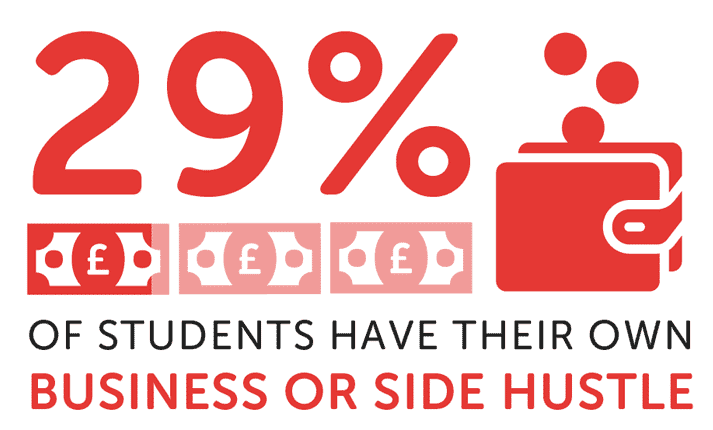
Just under three in 10 respondents (29%) told us they have a side hustle or own their own business.
The vast majority of respondents (79%) earned less than £500 from this in the past 12 months – an increase from the 74% who said the same in 2025.
| Earnings (past 12 months) | How many said they'd made this much (2025)? | How many said they'd made this much (2026)? |
|---|---|---|
| Less than £500 | 74% | 79% |
| £501 – £1,000 | 13% | 10% |
| £1,001 – £3,000 | 8% | 8% |
| £3,001 – £10,000 | 4% | 2% |
| £10,001+ | 2% | 1% |
Bursaries, grants and scholarships
A quarter of respondents (25%) said they had received some form of bursary, grant or scholarship – exactly the same proportion as in 2025 and 2024.
However, at a time when additional cash is needed more than ever, 42% of those surveyed felt they hadn't been made aware of this funding. This is up from 38% in 2025, and is the highest figure we've recorded since 2022 (42%).
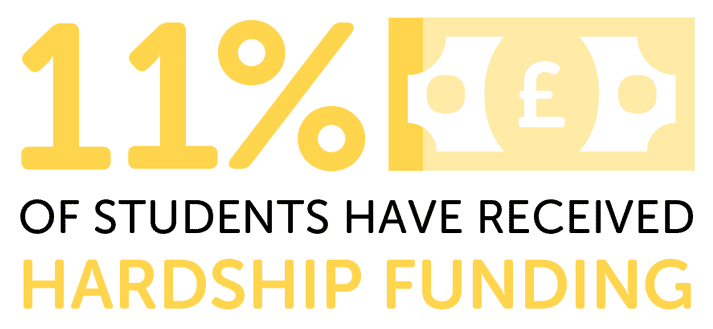
Just over one in 10 respondents (11%) said they'd received hardship funding from their university in the 2025/26 academic year. While this represents a marginal decrease compared to 2025 (13%), the average amount given to each recipient has seen a very slight increase (£1,282, up from £1,271).
How much money do parents give their children at university?
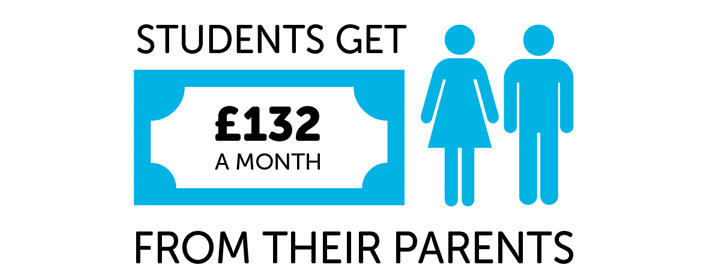
For the third consecutive year, the average parental contribution received by respondents has dropped. In fact, at £132 per month, it's the lowest figure we've recorded for this stat since 2021.
| Survey year | Average monthly parental contribution |
|---|---|
| 2021 | £121 |
| 2022 | £150 |
| 2023 | £227 |
| 2024 | £171 |
| 2025 | £146 |
| 2026 | £132 |
At the same time, the proportion of respondents receiving money from their parents has also fallen.
Despite a slight increase in 2025, it appears that over the long term, fewer and fewer parents are either willing or able to give their children money at university.
| Survey year | How many said they receive parental contributions? |
|---|---|
| 2020 | 68% |
| 2021 | 66% |
| 2022 | 59% |
| 2023 | 53% |
| 2024 | 50% |
| 2025 | 52% |
| 2026 | 48% |
Put simply, fewer students are now receiving parental contributions – and those that are, are receiving less. This is a concern for two reasons.
Firstly, as Maintenance Loans fall so far short of living costs, students are increasingly turning to other sources to plug the gaps. Very few households can bridge this shortfall entirely, but for parents to be contributing less only makes it harder for students to make ends meet.
Secondly, and in many ways linked, is what's happened to the Maintenance Loan's parental income threshold – or, perhaps more accurately, what hasn't happened.
When a student applies for maintenance funding, the amount they receive is partly based on their household income (other than in Wales, where it simply determines how much of their support comes as a loan or grant). If a student receives less than the maximum amount, the government effectively expects their parents to make up the shortfall.
In England, the threshold for receiving the full amount sits at £25,000 – so, if your household income is below this figure, you receive the maximum loan. Had it risen with inflation, this threshold would be over £40,000 today, entitling many more students to the full amount. Instead, it's been frozen at £25,000 since 2007.
This fiscal drag has further chipped away at the real-terms value of student funding, meaning more parents are expected to contribute, and to a higher value. And yet, our survey results suggest the exact opposite is playing out.
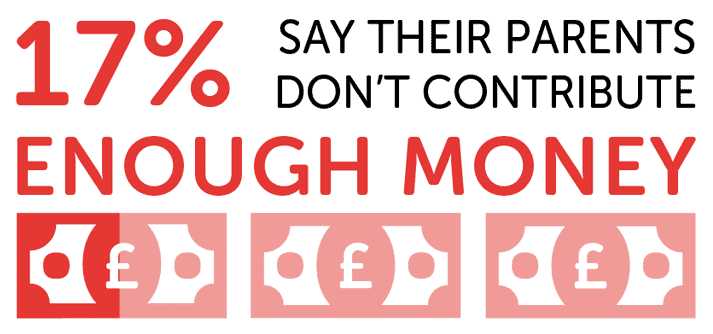
Nonetheless, just 17% of respondents said their parents don't contribute enough.
While students may not understand the full history of Student Finance policy and thresholds, they may appreciate that their parents are also enduring a cost of living crisis, and are giving as much as they can.
With so much of the discussion around Student Loans focusing on repayments, it's vital the issues with the current funding system are resolved too. As we argued in our submission to the Treasury Select Committee, increasing the parental income threshold to reverse almost 20 years of freezes should be a priority.
How much money do students have in savings?
Four in five surveyed students (80%) said they had at least some savings at the time of responding. This is slightly down on 2025, when 83% of respondents had money saved.
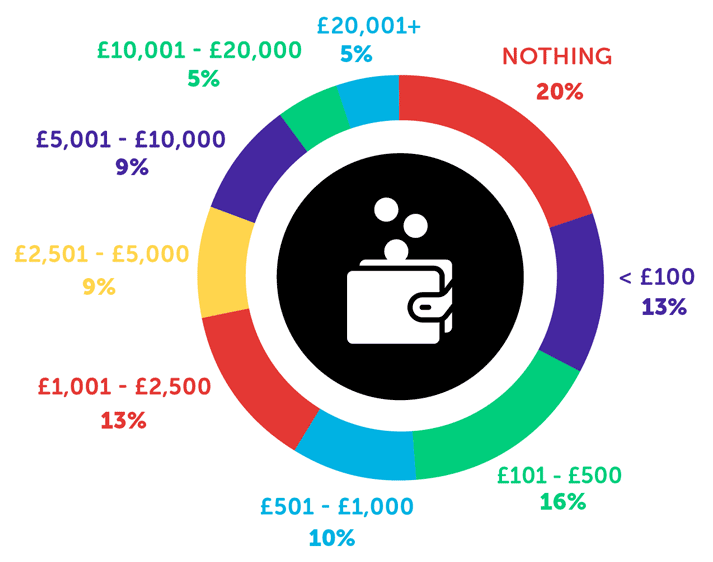
Year on year, we've also seen a decline in the proportion of students saying they have larger amounts in savings, and an increase in those saying they have less or none:
| Savings at the time of the survey | How many said they had this much (2025)? | How many said they had this much (2026)? |
|---|---|---|
| Nothing | 17% | 20% |
| £100 or less | 13% | 13% |
| £101 – £500 | 11% | 16% |
| £501 – £1,000 | 14% | 10% |
| £1,001 – £2,500 | 12% | 13% |
| £2,501 – £5,000 | 10% | 9% |
| £5,001 – £10,000 | 9% | 9% |
| £10,001 – £20,000 | 8% | 5% |
| £20,001+ | 6% | 5% |
In 2025, 41% of respondents said they had £500 or less in savings. This year the figure has risen to 49%, suggesting more students are either having to use their savings, or are unable to save in the first place.
Here's a selection of the most unusual or extreme techniques respondents used to save money:
- Ate lentils for one week straight. Only lentils. I can longer eat lentils.
- Put money into different envelopes with glitter in them, so if I open it to spend I have to spend time cleaning up first. The step of having to clean, to probably buy something I don't really need, stops me from spending it.
- Unplugged the fridge for winter.
- Snuck BuzzBallz in my bra.
- Purposefully hid my card in my house until I forgot about it and lost it and deleted the banking app.
- Sold all my belongings, wore the same underwear and clothes multiple weeks, reduced eating and slept more, only drinking liquids [and] eating expired bread.
- Race my friends home after a night out (by foot) to save money on Ubers. The competitiveness makes it easy to do.
- Staying in the university library between tenancies.
- Spent 45 minutes hunting for a discount code to save £2. In hindsight, my time was worth more than the saving.
- Collected enough free brown sugar packets from cafes and hotels to bake cookies.
- I tried to lock myself out of my bank account just so I couldn't spend anything, even going as far as going to change my password (only my friends knew it) so I couldn't access Apple Pay.
- Pretended my sister and I were a couple on Valentine's Day to get free food.
How much do students spend?
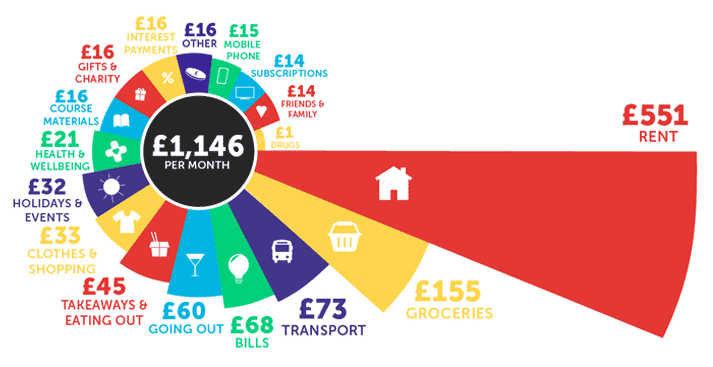
Respondents in our survey spent an average of £1,146 per month on living costs, up by £4 since 2025.
This increase is significantly below inflation, but shouldn't be taken as a sign that students have somehow been insulated from rising prices. A closer look at the figures reveals that spending on many essentials has actually increased, with savings made in many other areas:
| Selected outgoings | Average monthly spend (2025) | Average monthly spend (2026) | Difference |
|---|---|---|---|
| Rent | £529 | £551 | + £22 |
| Groceries | £146 | £155 | + £9 |
| Transport | £67 | £73 | + £6 |
| Clothes and shopping | £40 | £33 | - £7 |
| Takeaways and eating out | £49 | £45 | - £4 |
| Course materials | £20 | £16 | - £4 |
| Health and wellbeing | £24 | £21 | - £3 |
These savings are not a cause for celebration. Students – or anyone, for that matter – shouldn't have to cut back on the vanishingly few luxuries or treats they enjoy, just to cover the cost of food, a roof over their head or travel to and from university.
Many of the written responses to our survey describe a student lifestyle very different to that of previous generations. Several respondents say they very rarely leave the house, and others describe an extremely basic diet, often skipping meals.
With that in mind, these stats shouldn't be taken as the student cost of living, because what's described is simply not an acceptable quality of life. Instead, the figures represent what students are actually spending – students who are skipping meals, sofa surfing and socially isolating themselves.
In effect, these figures are the cost of surviving.
Student spending around the UK
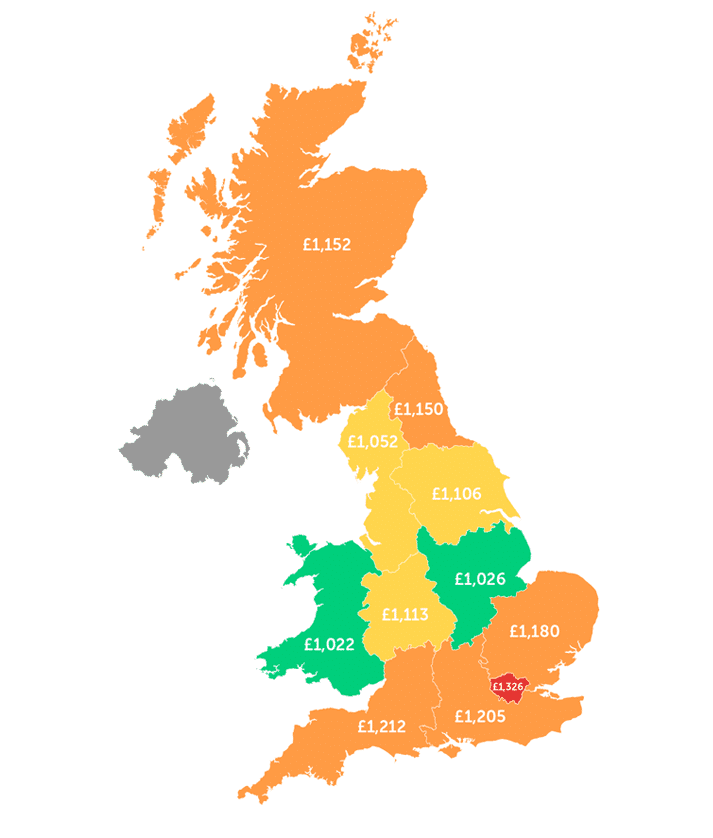
These figures include all responses, including those from students living with their parents. We didn't receive enough responses in Northern Ireland to provide a reliable average for the region.
Once again, respondents in London reported spending the most on their living costs, averaging £1,326 per month (up from £1,269 in 2025).
Students in the South West (£1,212 per month) and the South East (£1,205 per month) reported the second- and third-highest spends, followed by the East of England (£1,180 per month) and Scotland (£1,152 per month).
At the other end of the scale, students in Wales (£1,022 per month) and the East Midlands (£1,026 per month) reported the lowest.
Students are struggling with food poverty
Food poverty is one of the biggest issues facing today's students.
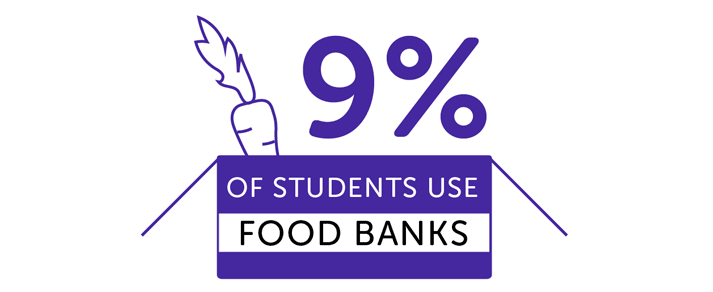
While the proportion of respondents saying they'd used a food bank in the previous 12 months has dropped slightly (now 9%, down from 10%), the change is negligible, and the figure remains far too high.
Research by Brunel University of London suggests that almost two-thirds of UK universities now operate a food bank. It's encouraging that universities are responding to the issues facing their students, but food banks should not be seen as a long-term solution.
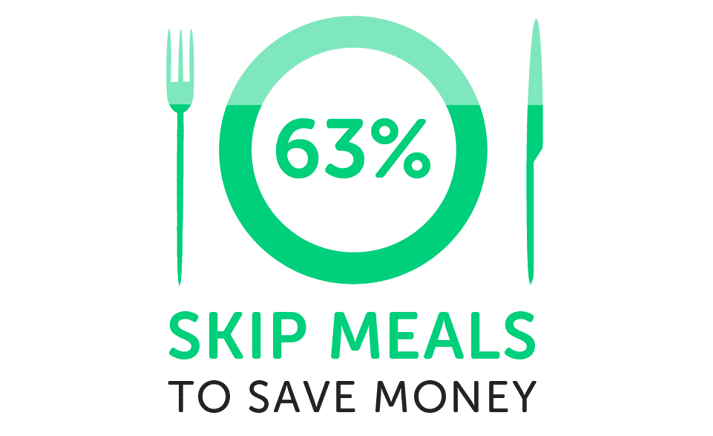
Indeed, with 63% of respondents saying they skip meals at least some of the time to save money (including 22% who said they do so "often"), it's clear that food poverty isn't just a problem for the one in 10 using food banks.
It's affecting almost two-thirds of our respondents, and will no doubt have a detrimental impact on their studies, as well as their physical and mental health.
Here's a selection of quotes from respondents discussing their experiences of food poverty:
- Can't always afford to eat so go nearly half a week without eating anything and only drinking tap water, that's it.
- For about three months I had the option of paying rent or eating three meals a day, so I paid rent and got the cheapest rice, fish and peas I could find and had one large meal a day so that I could keep a roof over my head.
- I had to skip so many meals to save money, it significantly impacted my health and required medical attention. Even though I've got more money now, the fear of running out of financial resources makes spending very stressful.
- My uni has [a food bank] but it's in a social space and I'd be scared someone would see me use it.
- I can't find a local food bank near my uni. But I often used Olio to collect food wastage so I could have some meals when I didn't have the money to buy food.
- As a Sikh, I'm fortunate enough to visit the Gurdwara (Temple) for free food.
- I feel embarrassed to go [to a food bank] when there's people in worse positions than me that need this service more than I do.
Is Student Finance enough to live on?
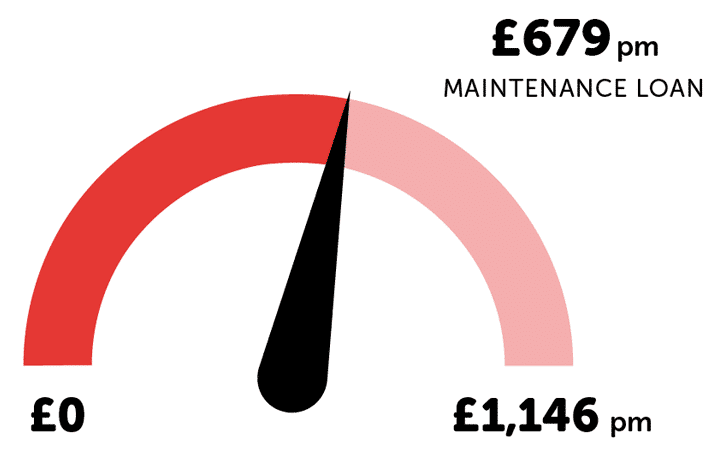
NOTE: see below for an update on this stat.
One of the biggest indicators of students' financial struggles is our survey's shortfall stat – put simply, the difference between the average Maintenance Loan and the average amount spent on living costs.
This year, that figure sits at £467 per month (or £5,604 per year), meaning students need to find an average of £467 every month just to fund the very basic standard of living outlined above.
This is an improvement on 2025 (£502 per month), but again, should not be celebrated.
Firstly, it should be noted that our methodology has changed. Previously, we've submitted a Freedom of Information (FOI) request to the Student Loans Company (SLC) for the average Maintenance Loan received by English students in the preceding academic year (in this case, 2025/26).
However, in this survey we've used the figure from the Department for Education's own release, which historically produces a higher figure than that of our FOIs.
Had we used it last year, the shortfall would have been £495 per month. This year's figure (£467 per month) is still an improvement, but to a lesser degree.
Secondly, while the shortfall does appear to be shrinking, the situation is still much worse than even a few years ago. In 2020, the gap was £223 per month, meaning it's more than double what it was at the start of the decade.
And, as explained earlier, although the growth in student spending has slowed, the cost of essentials has increased. Students can only cut back on non-essential spending so much, and only a significantly above-inflation increase to Maintenance Loans can restore funding to pre-pandemic levels.
UPDATE to the Maintenance Loan shortfall
As mentioned above, we typically submit an FOI to obtain the average Maintenance Loan amount. Unfortunately, for several reasons, we couldn't use that stat when we were writing this year's report.
However, that has since changed. We can now share that, according to data supplied to us by the Student Loans Company (SLC), the average loan received by students from England in 2025/26 was £7,771 (£648 per month).
Notably, this is just £8 per month more than uncovered by 2025's FOI.
Compared to this year's student spending data, it also leaves a shortfall of £498 per month – just £4 less than in 2025 (£502 per month).
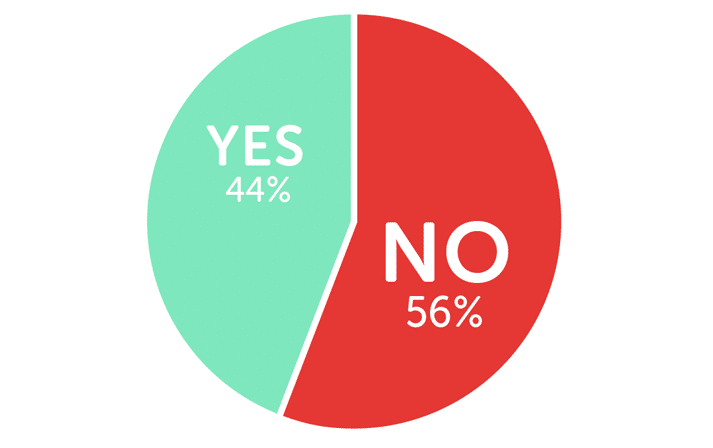
With that in mind, it is perhaps surprising that just 56% said they felt the Maintenance Loan wasn't enough to live on, with the same proportion saying they felt Student Finance was unfair.
This is a selection of quotes from respondents concerning Maintenance Loans and how they're calculated:
- The Maintenance Loan does not maintain you. It's far lower than even the cost of rent, let alone food, bills, travel, course costs etc. Students are forced to work for long hours and frequently have to prioritise work over study, which is completely backwards.
- Poorer students get into more debt, which seems unfair on them because they can't help their circumstances.
- [Maintenance Loans go] off parents' income, but they don't fund my university life, I do.
- My father's income doesn't mean he can afford to sustain me, he has two small children to raise and can't give what the government seems to think he can. I have to have a job every year, jeopardising my grades.
- Even though I had the maximum [loan], about 95% went on university rent and I was left with £500 per semester to live off. [...] I'm from a low-income background and have [the] maximum loan with no help, I am stuck in a cycle of debt.
- My mum has moved in with her partner (where I cannot live as there's no room), and it has halved my Student Loan for next year.
- Due to inflation, the current Maintenance Loan is completely unreasonable. My brother graduated in 2014 and received the same amount of money then as I do now.
Do students have enough financial education?
Almost all of the students in our survey (94%) said they budget. This figure has always been high (traditionally exceeding 80%), but it's only in the past three years that it's crossed the 90% mark.
In isolation, this may seem like positive news – we're always encouraging students to budget at university. However, given the extreme financial pressures facing students, it's clear that many will be budgeting because they have no other choice.
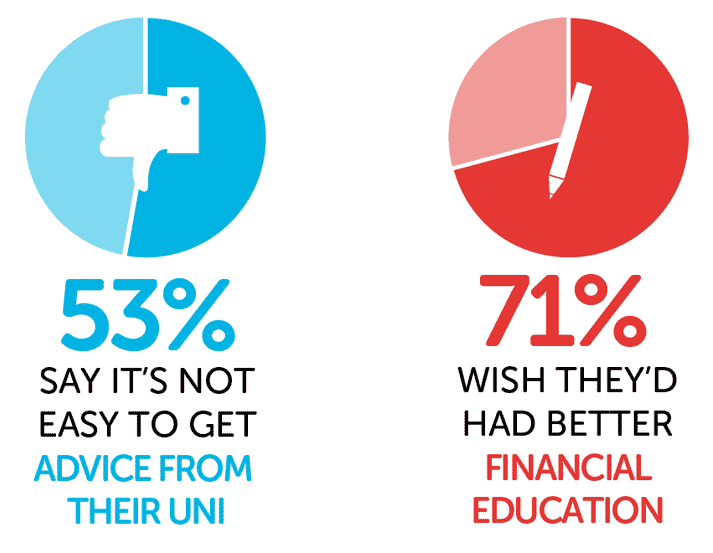
As we found last year, a significant chunk of respondents (71%, unchanged since 2025) also wish they'd had better financial education at school. This is despite the subject being part of the English curriculum since 2014, suggesting that what's currently offered is not enough.
Meanwhile, of the respondents who had asked their university for financial support or advice, 53% said it wasn't easy to get help. This is slightly higher than in 2025 (50%), and it's concerning that over half struggled to get the support they felt they needed.
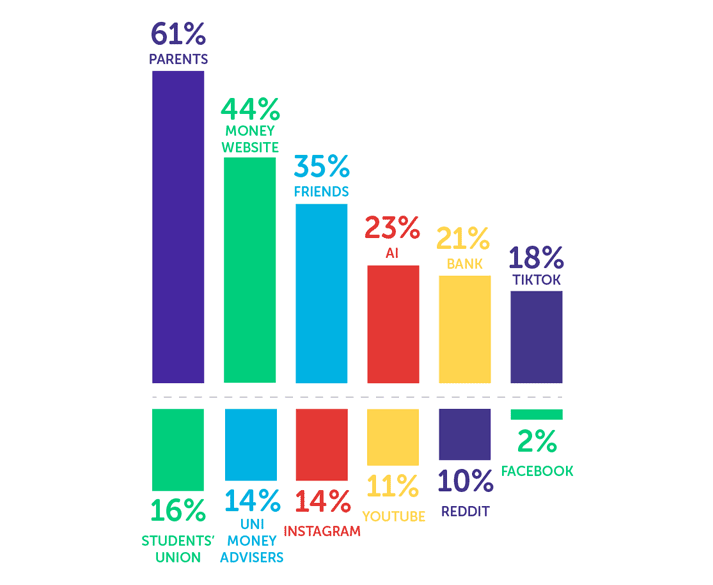
This year has also seen an interesting shift in where students go for money advice.
For the first time, we included AI as an option. 23% said they've used AI tools for financial tips, and while it's unclear if this has changed year-on-year, we can say that the proportions of respondents using other online sources of advice have either declined or flatlined:
| Selected sources of advice | How many respondents used this source? (2025) | How many respondents used this source? (2026) | Difference (percentage points) |
|---|---|---|---|
| Money advice websites | 51% | 44% | - 7 |
| TikTok | 18% | 18% | +/- 0 |
| 15% | 14% | - 1 | |
| YouTube | 11% | 11% | +/- 0 |
| 12% | 10% | - 2 | |
| 3% | 2% | - 1 |
However, it seems students aren't exclusively turning to AI instead – parents (61%, up from 57%) and friends (35%, up from 32%) were both more popular sources of advice than in 2025.
It may be that with the sheer volume of online advice, coupled with the risk of misinformation and scams, respondents feel more trusting of advice from real-world sources.
How would students get money in a cash crisis?
Given the financial landscape, many students inevitably face a cash crisis at some point during their studies. This is where respondents told us they'd turn for funding in such a situation:
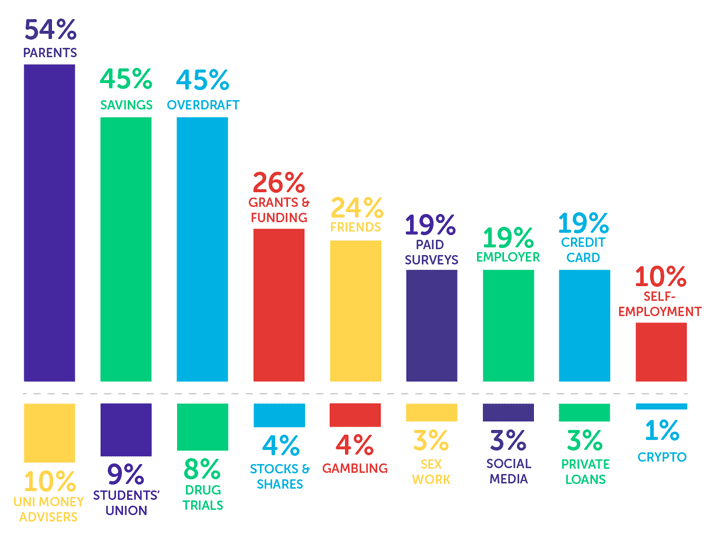
While parents remain the most common source of emergency cash, the proportion who would turn to them has fallen for the second consecutive year (down from 57%). At 54%, it's also the second-lowest figure we've ever recorded for this stat, again suggesting that students are aware of their parents' own financial difficulties and know they can only help so much.
At the other end of the scale, there has been an increase in the proportion of respondents who said they'd use a credit card in the event of a cash crisis (19%, up from 16%). This is the highest figure we've recorded for this stat since the peak of the cost of living crisis in 2023 (22%), and mirrors the increase in the proportion who said they already use credit cards to cover living costs.
Finally, just 3% of respondents said they'd turn to sex work in a cash crisis – the joint-lowest figure we've ever recorded. That said, many students shared their thoughts on either having done or considered sex work while at university:
- I would do sex work in a heartbeat if it guaranteed financial security.
- I was a camgirl for a bit but I got uncomfortable with it.
- I have considered selling feet pictures because [I] can't afford anything.
- It is embarrassing to talk about and I do not enjoy the way it is presented, but I do like getting money for an act I probably would've done anyway.
- I only sell my feet pics when I feel confident. The money varies each month. I started venturing into selling my socks, but I'd never do anything other than that.
- I don't exactly enjoy it, but it's a desperate and quick way if I'm running out of money.
- Sold my feet pics. I never thought I would do it, but it pays pretty well.
How do current students feel about Student Loan repayments?
In 2026, Student Loan repayments have rarely been out of the news for more than a few days.
Campaigners, including Save the Student, initially protested against the government's decision to freeze the Plan 2 repayment threshold for three years. In turn, a much wider debate about Student Loan repayments has ensued, with growing pressure on the government to reform the system.
Shortly before we published this report, the government issued its response to the Treasury Committee's inquiry. Although they committed to giving future borrowers clearer information, they pledged nothing on interest rates or repayment thresholds.
This is despite the new Education Secretary, Lucy Powell, previously describing the Plan 2 interest rate as "egregious", and recently saying the Student Loan issue was "at the top of my in-tray".
In the absence of any action from the government, we asked students what changes they would like to see made to repayments:
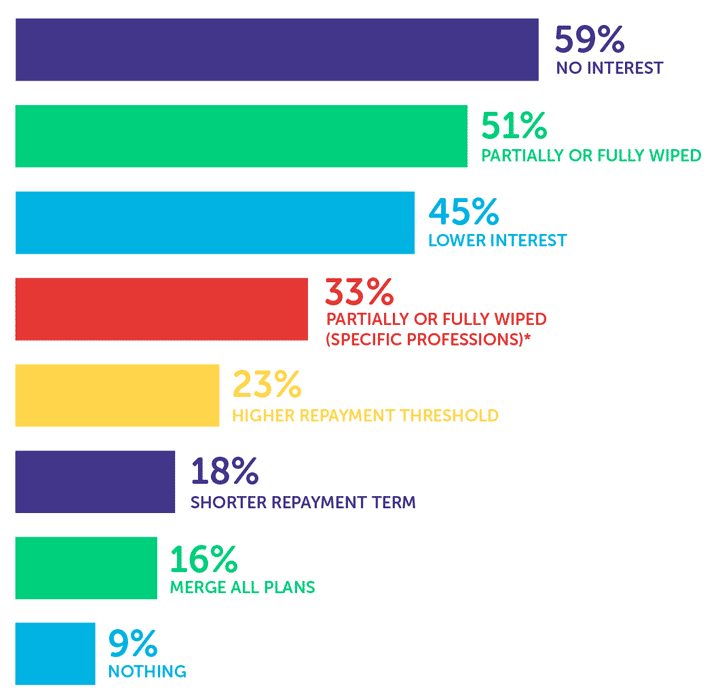
In total, 91% of those surveyed said there needed to be changes to Student Loan repayments.
Around three in five respondents (59%) thought the loans shouldn't charge interest, and over two in five (45%) believed the rates should at least be lower.
Just over half of those surveyed (51%) said the government should partially or fully wipe Student Loan debt for all borrowers, while a third (33%) believed this should only apply to those in selected professions, such as doctors, teachers and nurses.
Notably, despite the repayment threshold freeze triggering the recent debates, just 23% of respondents wanted to see this level increased.
Unlike lowering the interest rate – which only slows the rate at which the debt grows, and would likely only reduce lifetime repayments for higher earners – increasing the repayment threshold would reduce monthly payments for all graduates.
It may be that current students are happy to repay more each month, as long as the interest rate is lower and they have a realistic chance of clearing the balance in full.
Or, some respondents may still be confused about the role that interest rates play in Student Loan repayments.
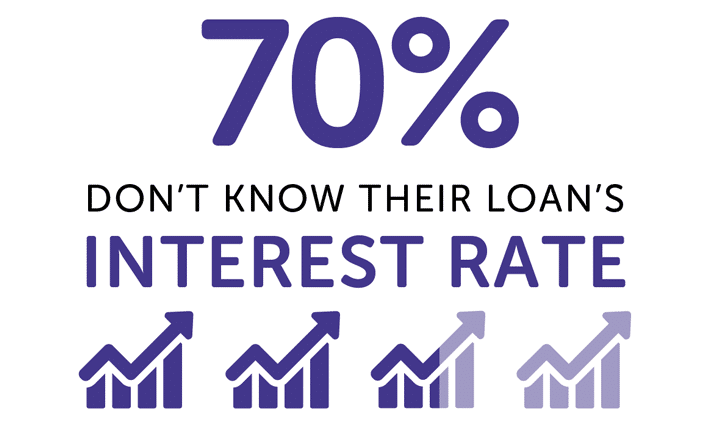
Indeed, over two-thirds of respondents (70%) told us they didn't know the interest rate on their Student Loan. This is up from 65% who said the same in 2025.
Much of the recent discussion has centred on Plan 2 loans, which usually charge interest at RPI plus up to 3% (this is capped at a maximum of 6% until September 2027). But other repayment plans have different ways of calculating the interest, which may have caused further confusion.
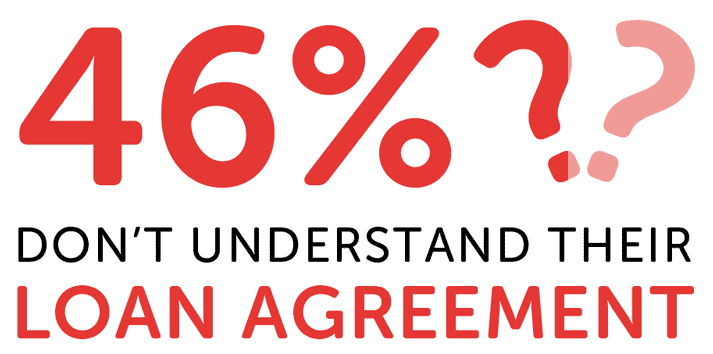
Similarly, 46% of surveyed students said they don't fully understand the terms of their loan – up from 40% last year, and the highest since 2018.
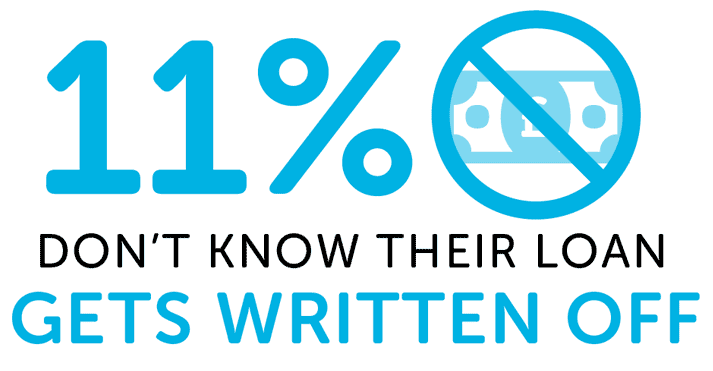
Furthermore, 11% of respondents didn't know that their loan would be written off at some point.
One may have expected increased coverage of Student Loans to have improved understanding of their terms. But with most of the debate focusing on Plan 2 loans – now only issued to new borrowers from Wales – current students may be unsure how much of what's said applies to them.
In addition, some commentary has occasionally strayed into misinformation, often concerning interest rates.
For example, some have mistakenly suggested that higher interest rates mean higher monthly repayments. Others have shared false figures for Student Loan interest, and some have incorrectly said that borrowers repay 9% of their total earnings, rather than of earnings over a threshold.
While we're glad to see the media voicing the concerns of students and graduates, it's possible that wider coverage may have inadvertently spread falsehoods about repayments.
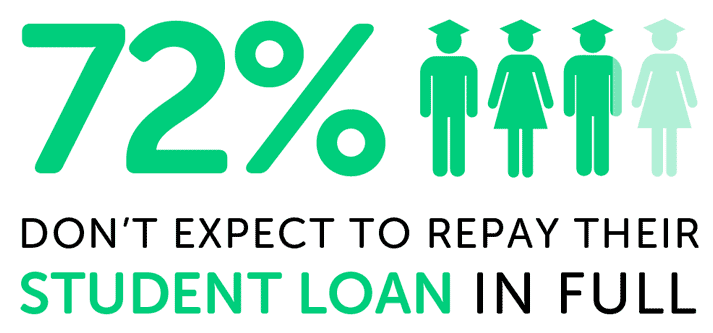
Much of the recent debate has focused on how loan balances continue to grow despite repayments, and just under three-quarters of respondents (72%) don't think they'll repay the loan in full.
While it's certainly true that only a minority of Plan 2 borrowers will repay their debts in full, the government's Student Loan forecasts predict that 55% of those from England who started in 2025/26 (Plan 5 borrowers) will eventually clear their balances.
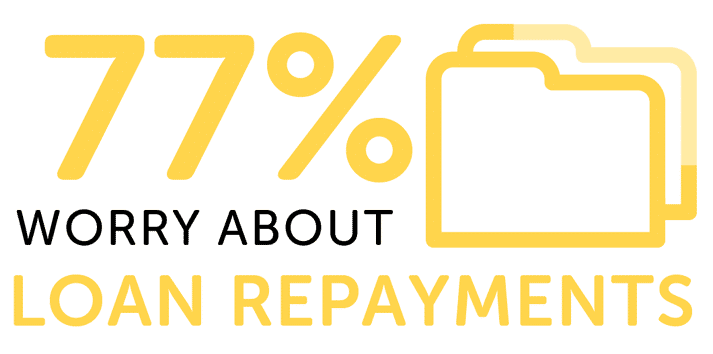
Perhaps most concerning of all is that 77% of those surveyed worry about their Student Loan repayments. This figure has seen a huge increase since 2025 (63%) and is the highest we've ever recorded in the 11 years the question has featured in our survey.
As we made clear in our submission to the Treasury Committee, it's vital that in addition to reforming the terms of Student Loans, the discussion and education around them must change too. This includes improving financial guidance at school, to ensure young people understand the decisions they're making.
Is university good value for money?
Since the last survey, the government has confirmed that tuition fees will continue to rise with forecast inflation.
Despite the largely unfavourable coverage of Student Loans and the cost of a degree, there has been a slight improvement in the proportion of respondents who think university is good value for money (now 58%, up from 52%).
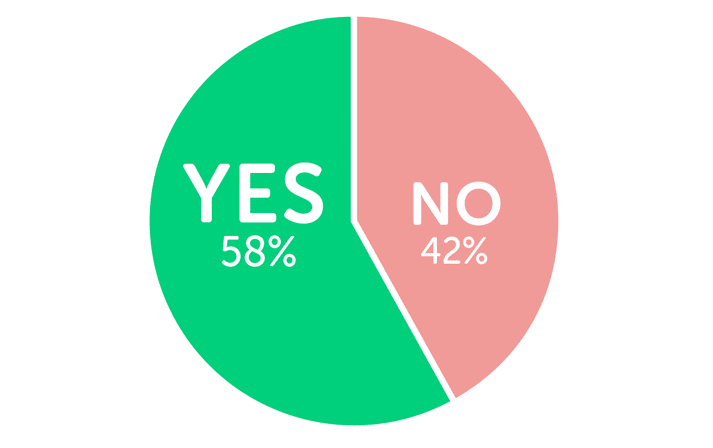
This is what some respondents had to say about the cost of studying and if they felt it was worth the investment:
- For how student life is advertised, students spend way too much on rent and general living to be able to even enjoy university.
- While expensive, it's still worth it.
- Students on courses like Healthcare or Medicine [...] should have reduced fees if they go into the NHS straight away for employment and stay for three or more years.
- I am working to pay my way through uni and finish with no debt. I am extremely privileged to be able to do this and acknowledge that had my parents not allowed me to live at home for free, I would have had to take the loan like everyone else. The thought of the loan hanging over my head post-graduation, accumulating interest and having to end up paying almost double what I borrowed, almost put me off uni altogether – and had I not been doing a career where there is no alternative, I would not have gone to university.
- Education should be free.
- Many people my age are now choosing not to go to university simply because of the cost. I can safely say that while I massively enjoy attending university, and know it may benefit my career in the future, it was a potentially detrimental financial decision that may not even be worth the price, which is something that cannot be said for previous generations.
- I think the overall cost for studying at uni is not worth it unless it is a necessary step towards [a career], but I still think [those who will] work in public health such as NHS services should not be charged the way they do.
- Student life is becoming unaffordable. The cost of rent, food, travel and course expenses keeps rising, but maintenance funding doesn't keep up. Many students are forced to choose between studying, working long hours and covering basic living costs. No student should have to struggle financially just to get an education.
How many students think about dropping out due to money?
The combination of inadequate Maintenance Loans and negative coverage of Student Loan repayment terms has led some to wonder if fewer young people will go to university.
This hasn't yet materialised, but we are concerned that additional financial hardship may cause an increase in the number of students dropping out.
While there's no official data on why students leave their courses early, our research suggests that money could be a growing factor.
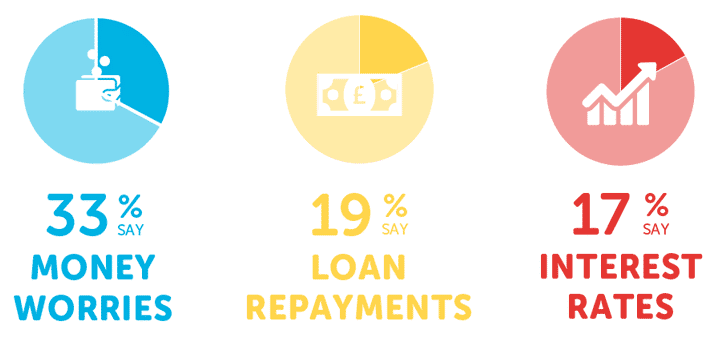
Of the options we give respondents for why they'd considered dropping out – money struggles (33%, up from 31%), Student Loan interest rates (17%, up from 12%) and the size of Student Loan repayments (19%, up from 16%) – all three saw an increase compared to 2025.
At the same time, the proportion who said they haven't considered dropping out at all fell from 59% to 54%.
We strongly feel that if a Student Finance system is directly responsible for so many students considering dropping out of university, this is a sign that serious reforms are urgently needed.
What students expect from graduate life
For the third year in a row, we have seen an increase in the proportion of respondents who say they're not confident about finding work after graduation.
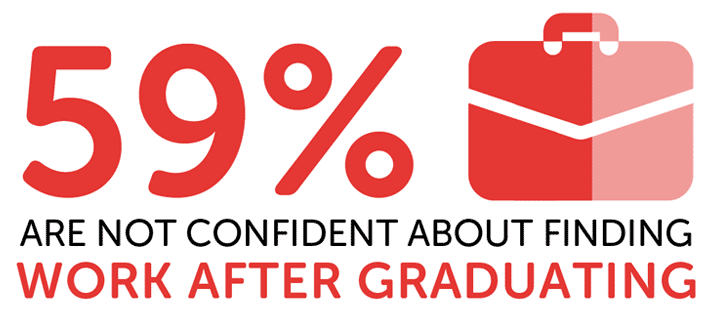
At 59%, it's also the highest figure we've seen since 2021's survey (62%), when the COVID pandemic was still having a profound impact on economic forecasts.
Today's students face different challenges, one of which is the rise of AI. So, for the first time, we also asked respondents how they felt the technology would affect their career prospects.
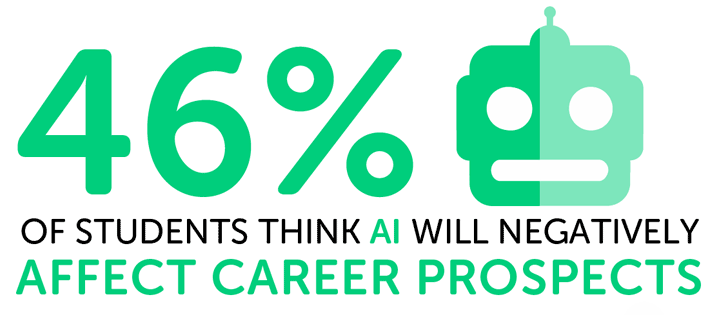
46% of surveyed students felt AI would either slightly (27%) or significantly (19%) damage their career in some capacity. By contrast, just 12% thought it would have a positive impact, and just under a quarter thought it wouldn't affect them at all.
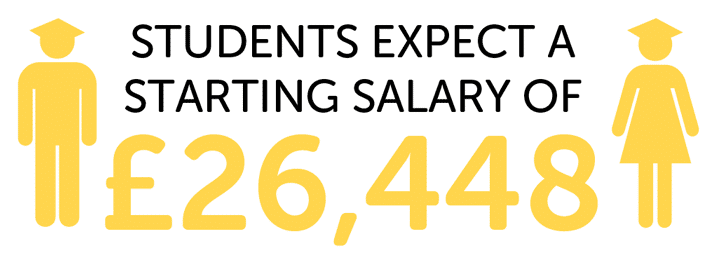
Strikingly, the average salary that respondents expect in their first graduate job has also fallen (£26,448, down from £26,861). This is the first drop we've recorded since 2021 when, as previously stated, the pandemic was still a consideration.
What others say about the survey
Vivienne Stern MBE, Chief Executive of Universities UK (UUK), said:
Any student who is worried about their finances should know they are not alone; they can reach out to their university's student support service which will be able to help. Universities are primed with advice and can assist with essentials; they also have initiatives such as hardship funds, bursaries and discounted meal schemes which can support students.
The government must review its maintenance thresholds in England, to better help students from all backgrounds thrive in their university careers.
Students also need confidence that their degree will set them up for work. That's why Universities UK has launched the Future Jobs Roadmap, making sure every student leaves ready to thrive in a fast-changing jobs market.
About this survey
Save the Student has been running the National Student Money Survey since 2013. Our independent findings provide insights into the realities of student money and inform the content on this website.
The survey was conducted entirely online.
We push it out to a mix of our own followers, distribution via student service centres and unions at some universities, as well as through social media promotion. This mix ensures that we are not only polling our own users.
Figures have been rounded to the nearest whole number.
For more information about this survey, case studies or expert comments, please get in contact.
- Source: National Student Money Survey 2026 / www.savethestudent.org
- The survey received 1,419 responses.
- Students were polled between May and August 2026.
- Data from our previous surveys.
- Save the Student's Press Page.
- Tools and resources.
Student Money Cheatsheet
In response to recent survey findings, we have created the free Student Money Takeaway resource for university students.
This is a printable PDF, and it includes a one-minute budget sheet. In the resource, you can find the best advice from our website condensed down to a couple of pages.