Student Banking Survey 2026 – Results

With banks fiercely competing for student customers, which ones rank highest? The Student Banking Survey 2026 uncovers the best-rated banks and the trends shaping student banking.
Credit: fratello – Shutterstock
Save the Student's twelfth annual student banking survey delves into how students feel about bank accounts, overdrafts, cash, money muling and more.
The report also includes student satisfaction scores for each bank. A key part of our best student bank account guide.
What's in this report?
- Key findings
- How do students choose a bank?
- What is the most popular bank among students?
- Student satisfaction with their banks
- Do students consider switching banks?
- Student borrowing habits
- How many students use BNPL services?
- How many students have Lifetime ISAs (LISAs)?
- How often do students use cash?
- Have students been approached for money muling?
Key findings from the Student Banking Survey 2026
Here's an overview of the key findings from this year's Student Banking Survey:
- Nationwide overtook Santander to become the most commonly used bank among our respondents, with one in five students choosing it.
- NatWest and Nationwide topped our student review ratings in 2026, with the banks receiving respective average scores of 4.34 and 4.33 out of 5, compared to a sector-wide average of 4.01.
- 17% of surveyed students are looking to switch banks.
- Among those with overdrafts, 23% have reached their arranged limit at some point.
- The use of buy now, pay later (BNPL) services has increased, with 29% using them at least some of the time. This includes 9% who use them often.
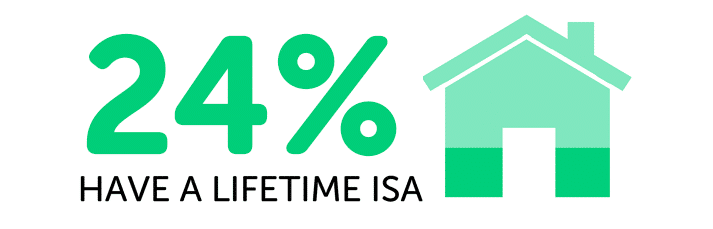
- Almost one in four have a Lifetime ISA (LISA) account, but 21% of those in the survey don't know what they are.
- 57% use cash once a month or less, showing a steady year-on-year decline.
- 1 in 20 students have been approached by someone asking to use their bank account.
How do students choose a bank?
Among the students surveyed, the reasons for choosing their student bank account were as follows:
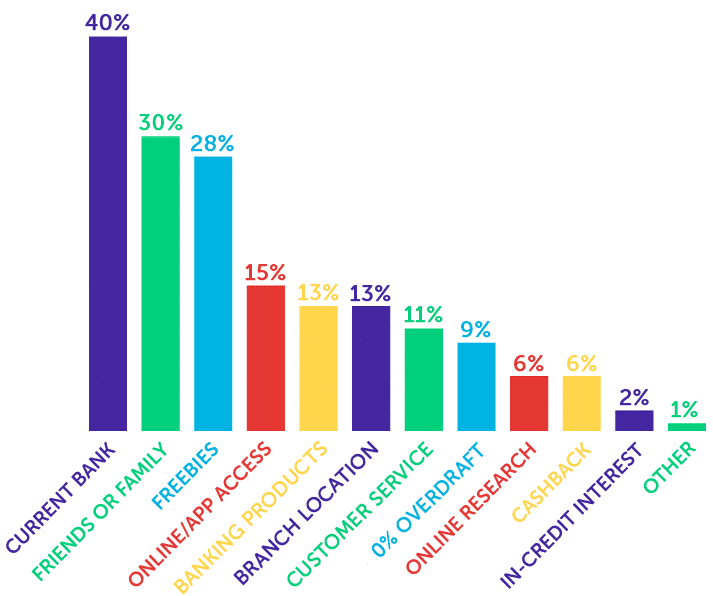
40% of the students surveyed chose their current account because they already banked there. Since launching the survey, this has consistently been the most common reason.
On top of that, 30% chose their account because their friends or family members were customers of the bank. This suggests brand loyalty continues to play a major role in students' decisions, even if it means some miss out on more competitive offers elsewhere.
Perhaps surprisingly, student bank account freebies – with some banks offering incentives worth £100s – were only a factor for 28% of respondents.
The appeal of a 0% overdraft also appears to be fading, with the proportion of students citing it falling from 11% in 2025 to 9% this year. This puts it behind banking products, branch location and customer service.
The influence of branch location (13%) was also notable, as a similar proportion of those in the survey (15%) told us they had never set foot in a high street bank.
How do students research bank accounts?
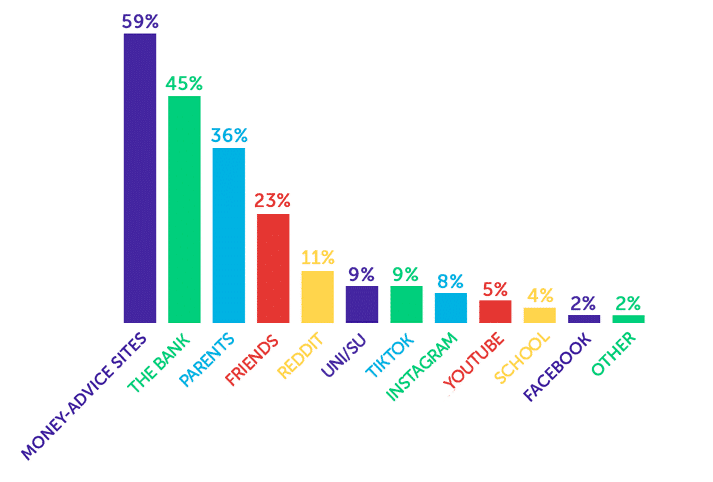
The majority of students in the survey (59%) turned to money-advice websites to research bank accounts.
At 45%, there has been a notable drop in those relying on banks for information (down from 53% in 2025). This could indicate that more students are comparing accounts independently before applying.
Similarly, although parental advice (36%) still plays an important role, it has become less influential since 2025 (43%).
Student reliance on social media, however, has remained roughly the same – although TikTok has moved above Instagram for the first time.
What is the most popular bank among students?
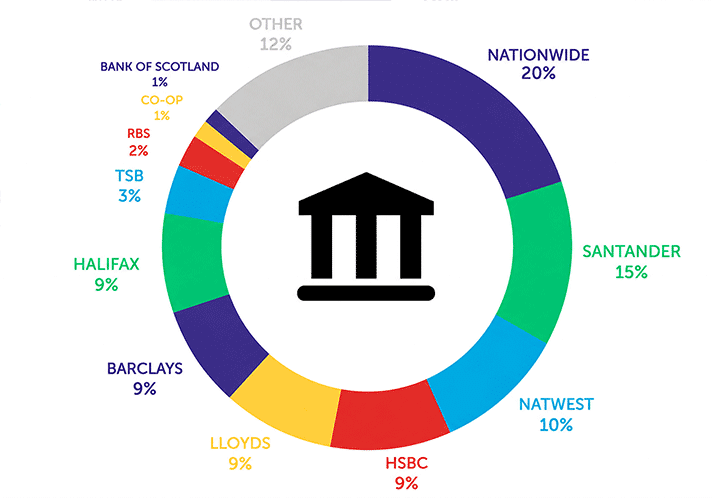
One in five surveyed students bank with Nationwide, making it the most common choice. Its popularity rose by seven percentage points, enough to secure the top spot for the first time since the survey began.
This also coincides with Santander, Natwest, HSBC and Lloyds becoming less popular compared to 2025.
In the graphic above, we focused on banks that offer accounts designed specifically for students. However, 12% of those in the survey said their primary account was with an alternative bank. These included:
- Monzo (5%)
- Revolut (2%)
- First Direct (1%)
- Metro (1%)
- Starling (1%)
- Chase (1%).
Student satisfaction scores
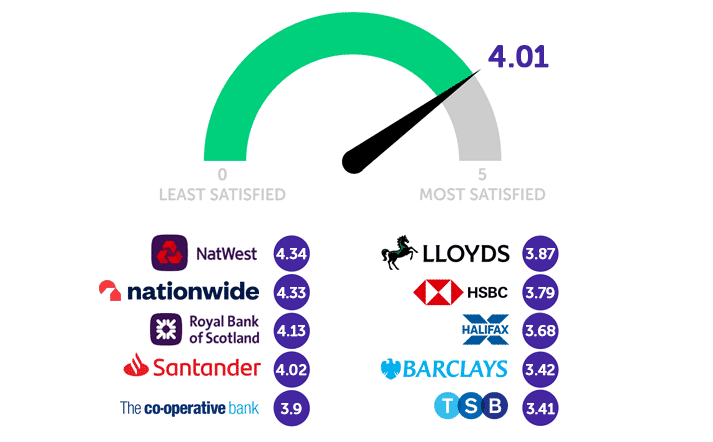
Note: Just under 1% of respondents were with the Bank of Scotland, so the sample size was deemed too unreliable to include.
NatWest, Nationwide and RBS comprise the top three rated student banks in our survey.
Santander has steadily dropped over the past few years, with Nationwide rising to its highest-ever ranking. This seems to reflect the increasingly competitive nature of the market, with more banks offering enticing incentives.
Do students consider switching banks?
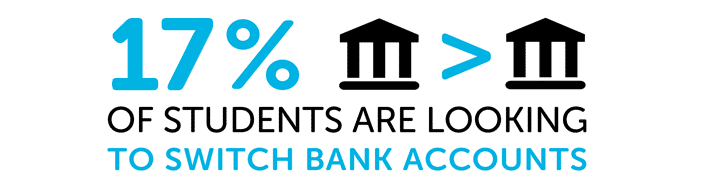
We'd always encourage students to shop around to get the best available offers for switching banks. But despite an increase from last year (15%), only 17% of those in the survey said they were looking to do so.
There were many reasons respondents gave for wanting to switch, such as the incentives on offer elsewhere. Similarly, there were a range of motivations for staying put, including not wanting to switch as they believed it could damage their credit score.
This is why some surveyed students said they were looking to switch bank accounts:
- Better ethical standards.
- Bigger overdraft and more perks.
- I'm looking for [a] bank account that has access to a savings account with a better interest rate to store my student loan.
- Looking for better bank switch offers.
And these were some of the reasons why respondents decided to stick with their current banks:
- Always had this bank account and I'm used to the layout.
- Because I'm worried about my credit score.
- Can't be bothered working out best deals.
- I feel no bank is perfect and I feel comfortable with my bank for now.
Student borrowing habits
We wanted to get a better understanding of how students borrow money while at university, so we asked them specifically about overdrafts, credit cards and buy now pay later (BNPL) sites.
How overdrawn are students?
| Size of overdraft | Proportion overdrawn by this amount |
|---|---|
| Not overdrawn | 75% |
| Less than £100 | 6% |
| £100 – £499 | 6% |
| £500 – £999 | 5% |
| £1,000 – £2,000 | 5% |
| £2,000+ | 1% |
| Rather not say | 2% |
Of those in the survey, 75% said they weren't overdrawn at the time of responding. This is a promising sign, representing an improvement on the 70% who reported the same in 2025.
However, looking only at the 25% who were in their overdrafts, 20% told us that they were overdrawn by £1,000 or more, with 23% having hit their limit at some point.
An alarming 41% said they didn't know when their overdraft needs to be repaid.
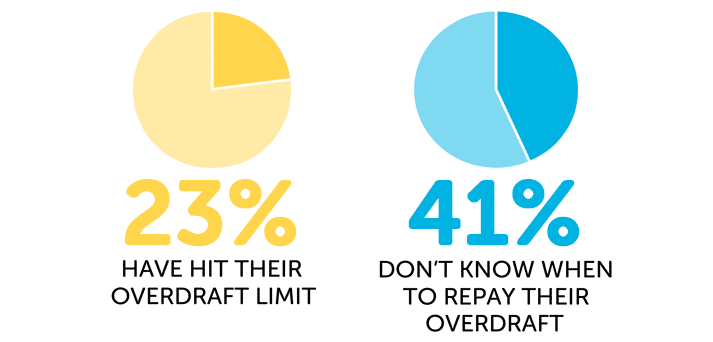
There's no doubt that many students appreciate the 0% overdrafts offered with their student bank accounts. However, others stated that they were wary about the encouragement to spend, and the repayment terms after graduating.
Do students have credit card debt?
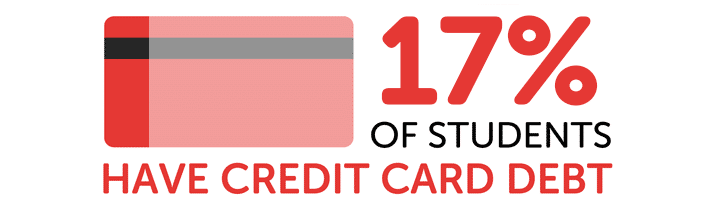
Almost one in 20 polled students told us they have credit card debt. This is up significantly from 11% in 2025, likely reflecting the growing need for students to borrow to get by.
This should come as no surprise, given that the Maintenance Loan falls short of living costs by an average of £502 per month.
How many students use BNPL services?
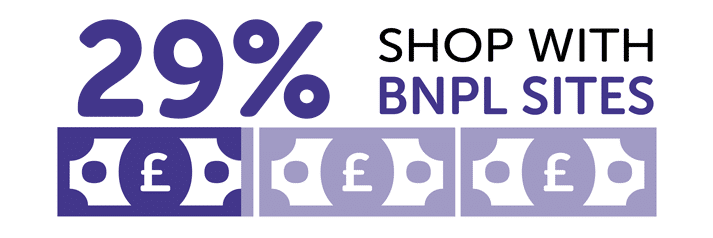
Last year, we saw an encouraging drop in the use of buy now, pay later (BNPL) services to 27%. However, this year it has risen again to 29%.
9% of students in the survey said they used these services regularly. In addition, 20% said they'd been late to make a payment, which is concerning given the fees involved.
The majority of opinions about BNPL services were negative. Here's a selection of comments from surveyed students:
- An irrelevant and bad idea for small every-day purchases, builds up habits of not paying when you have no money.
- Depending on what you're buying, I think it's quite useful.
- Easy to fall behind in payments. Allows for people who can't afford it, to shop more than they can.
- I don't think they are a good idea as the sites encourage impulse spending when you can't afford it.
- They can be useful but [there is] not enough regulation to stop them from being predatory or harmful.
How many students have Lifetime ISAs (LISAs)?
Lifetime ISAs (LISAs) have received a lot of news coverage recently, and will be replaced by a new First-Time Buyer ISA in the next few years.
Currently, LISAs allow you to save up to £4,000 per financial year, with the government paying a 25% bonus on your yearly deposits.
Awareness of LISAs has slightly increased from last year (up to 79%, from 78% in 2025). This is likely because the accounts have been heavily promoted over recent years as an effective way to save for a house.
24% of students in this survey said they have a LISA, with a further 55% saying they were familiar with them but didn't currently have one.
How often do students use cash?
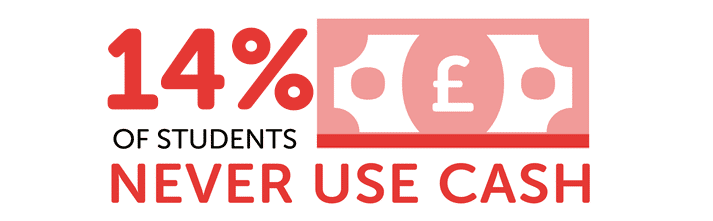
The number of students who never use cash in our survey has risen again to 14%. This is the highest figure we've ever recorded, even overtaking the levels seen during the pandemic (12%).
More than half of students (57%) now use cash less than once a month or never, continuing the long-term shift towards digital payments.
Here's an overview of how often respondents in 2026 use cash:
| Frequency of cash use | How many use cash this often? |
|---|---|
| More than once a day | 2% |
| Once a day | 3% |
| A few times a week | 9% |
| Once a week | 7% |
| A few times a month | 22% |
| Once a month | 13% |
| Less than once a month | 30% |
| Never | 14% |
We also wanted to gauge student interest in a cashless society. Roughly one in three (37%) of those in the survey would oppose it, with 14% saying they'd strongly support it.
Have students been approached for money muling?
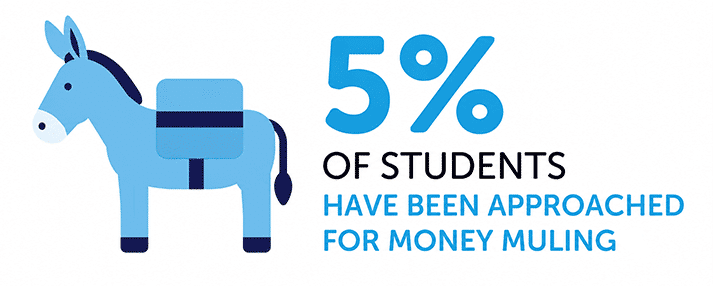
This year, for the first time, we also asked students about money muling. 5% of those surveyed admitted to being approached by someone wishing to use their bank account.
A further 3% were unsure, meaning they either didn't understand the question or weren't sure if they were affected.
While it's difficult to know and we cannot speculate, there's also the possibility that some surveyed students have been approached or even taken part in money muling, but were reluctant to disclose it.
About the Student Banking Survey 2026
- Source: Student Banking Survey 2026 / www.savethestudent.org.
- The survey received 845 responses.
- Students were polled between 23rd March – 12 May 2026.
- Data from our previous surveys.
- Save the Student's Press Page.
- Tools and resources.




![What do students spend money on? [stats]](https://www.savethestudent.org/uploads/what_students_spend_money_on2-252x160.png)
![What do students spend money on? [stats]](https://www.savethestudent.org/uploads/what_students_spend_money_on2-100x100.png)